Friday, October 13, 2017

Self-employed

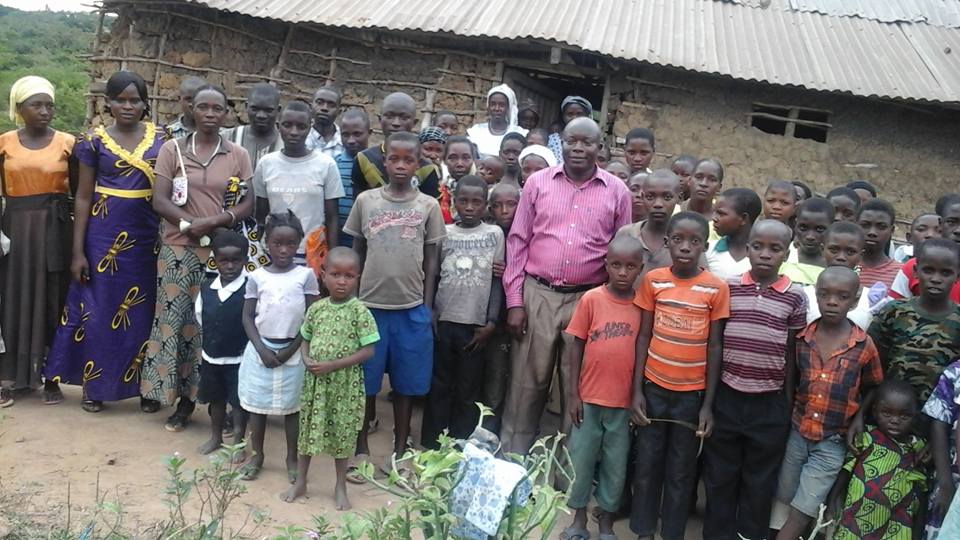
Young artisans, trained, equipped, and now self-employed.  2014-2017
Just this month, a sweet lady provided this young worker (center) with a
 sewing machine, part of the church's investment in her life.
The economy in coastal Kenya is loosely organized, and in the rural areas, there are few regular jobs.  Most household income comes from doing a little business here and there.

The critical elements for progress are perseverance, education, and skills.

Dressmakers and tailors are useful in the community, but it takes skill and equipment.  Support provided through the fellowship of local churches helped these folks work their way up to self-employed status; progress indeed.

About those churches ... it takes a good heart and personal sacrifice to serve.  This young pastor makes his living operating a motorcycle-taxi.  Where he serves, there's little regular income, and the typical church has no financial means to support a pastor.  If he wants to give his life and serve them, he still needs to make a living just like everyone else.  Friends in the states joined in to help make the motorcycle possible, and now he's got the means to provide for his family while serving others as pastor.  Impressive fellow.  Kind of like the apostle Paul when he was making tents in Ephesus ...

"I have not coveted anyone’s silver or gold or clothing.  You yourselves know that these hands of mine have supplied my own needs and the needs of my companions.  In everything I did, I showed you that by this kind of hard work we must help the weak, remembering the words the Lord Jesus himself said: ‘It is more blessed to give than to receive.’ ” Acts 20:33-35

The church that serves these folks is many things - a fellowship, a refuge, a place to be encouraged and to encourage others, and a help along the way.  Thank you, Father; give them good success.
________________________

So church can be practical, too.  There's much more to the stories here, of course, and opportunity for friends to make a difference. 


Friday, October 6, 2017

Continuing Opportunity

The last six months in coastal Kenya - again this year, the rainfall has been insufficient, food shortages have raised prices and emptied shelves in the marketplace.  Life is difficult for many.

Our friend Bishop Samuel and the churches labored together through the months, helping as they were able.

In April, they delivered a truckload of food and seeds for planting to the Guruguru community, and they shared with widows in need at church in Burundi.  The Guruguru school stayed open, teachers were paid, and food was provided daily, the only meal for some children.

In May and June, they continued supporting the teachers and school lunch plus they purchased textbooks and supplies.  Building materials were purchased for the Kibaoni church.  Bulk food purchases were made and delivered to the Guruguru community.  There's more to the church, of course.  They baptized 82 in June.

In July, they continued the school and community food support in Guruguru and Kibaoni.  Roofing materials were purchased for the Kibaoni and Mariakani churches.  The churches serve broadly as community centers and as child education facilities that include a midday meal, all part of the work of service.  The July harvest was small and shortages in the market persist.  They brought school supplies for the Kibaoni children to help get things started there.  Local officials have approved expanding the Christian school in Guruguru.  They hope to add more classrooms. 
Porridge before church

August and September, the work continues.  Porridge before church attracts a large number of children.  After months of effort, some areas had zero harvest.

Bishop Samuel has established 30+ churches, and his wife Glaris pastors also.  They and all the church leaders work like everyone else.  On a small farm, the bishop's corn harvest was less than hoped, but they shared it with the church community anyway.  They're doing their best to keep their own kids on track with schooling and preparation for life.

The church in Mariakani continues to expand to accommodate the
community they serve.  They provide wonderful care for a mob of
children, some of whom we've met in person in years past.
They've tackled so many needs along the way, and friends in the states get to assist.  A pair of orphans Samuel rescued from devastating circumstances are supported in a boarding school by a family here.  Trade school for another.  An orphan teen in Rwanda was assisted with training and a sewing machine.  Just this month, one of our families got to cover the costs for a young lady in Kenya for dressmaking.  It sounds small and simple, but it can make a lifetime difference.

For the months ahead, Samuel's priorities for assistance are centered around the schools and churches.  They're bringing hope, keeping people alive, and the children on track.  The Mariakani church facility has been expanded to satisfy health and safety standards for the number of children they serve.  For the Kibaoni church which first met under a tree, their building is complete and in use now.  A shelter has been built in Msambweni for the church there; they have 58 members.

Msambweni church under construction
For reference, the operating cost for the Guruguru school is around $500/month.  Teachers (3ea@$70/month), food prepared on site ($150+/month), plus teaching materials, student supplies, uniforms and shoes ($300+/semester).  The costs extend similarly to other venues.

Beyond the simple efforts to help others, the churches provide a place of worship with fellowship and encouragement for the community members, and they are a refuge for widows and orphans. 
_________________________________________________
Samuel writes,
“The support from OFH has done an amazing job, glory to God.  Through your partnership we have touched, transformed, helped hundreds of orphans and families around the coastal areas.  Our Guruguru nursery school currently has 80 children. They get free education and lunch. This has been a milestone.  The 3 teachers having been receiving their monthly allowance promptly.

The church buildings for Mariakani, Guruguru, and Kibaoni are also a big milestone for our ministry.  Thank you so much.”
_________________________________________________

The real world is a difficult place.  Having the chance to learn from folks like Bishop Samuel and his pastor wife, Glaris, changes everything.  If you'd like to join in via Our Father's House, please do.  Better yet, go see for yourself; you'd be welcome and blessed.  We'll be glad to arrange introductions.  :)


Wednesday, October 4, 2017

Pre-school is open!


In the west African country of Sao Tome & Principe, kindergarten is open (the Jardim de Infância de Milagrosa) for the kids in the community.  Parents are happy to see their children able to attend school in early age.  Classes begin the middle of this month.

The Milagrosa community pulled together to build the facility over long months of manual labor, initially funded by Camden Roofing and Construction in Charlotte NC.  UNICEF and the Department of Education joined in to bring the project to completion. 


Update January 2018 - Our thanks to Camden R&C for supporting development in western Africa and particularly for funding this school project.  Locals did the work, but Camden provided construction materials and support to make it happen. The school serves the community now with forty preschool kids enrolled. (Note the kiss, sent today to those who helped.) STeP-UP, the NGO on site, sends their thanks.  


Pictures from 01/2018 show delivery of refrigerator and kitchen supplies on the semester's opening day.  The occasion was attended by UNICEF and STeP UP and was broadcast on national television.
Thanks and a hat tip to Camden Roofing
and Construction in Charlotte NC for
their generous support of education
and assistance efforts in Sao Tome
and Principe, western Africa.


Friday, August 12, 2016

Dealing with drought


The rains in southeastern Kenya failed this season.  Crops have failed and domestic animals are dying for lack of food and water.  Local streams have dried up, and folks must walk around 20km to a vendor and buy water.  Government aid is inadequate.

A group of churches there has raised funds and bought loads of corn and beans.  In a village they served, they met children who hadn't eaten for five days.  An elderly gentleman was on the verge of starvation when they arrived.

These kids came without their mothers to meet the team.  Moms were out scavenging for anything edible and for water.  Bishop Samuel and his team sent them home with beans and corn meal.  It will help.

Bishop Samuel and his team have contracted a water tanker to serve the villages, perhaps once around, but the crisis will last a while, of course.

If you'd like to join in, drop me a line.  We'll be glad to introduce you.

Or you can donate via Our Father's House.  Click the 'donate' link and do a 'special offering' designated for Kenya.  Every penny goes to the churches there for this assistance work.  And, it's tax deductible.  :)

Saturday, October 24, 2015

Nobody wants to go

A friend explains about rural Kenya and how difficult it is to make anything happen there.  There's no money.  If everybody there wanted a church, there'd be no offering to build one.  Nobody really wants to go there and preach.
Our friend Samuel

So, that's where my friend Samuel goes to start new churches and share the good news, that there's hope, and life can be different.

Our Kinagoni church, about 70 km
west of Mombasa
Samuel is a bishop, but he doesn't make a big deal about the title.  All it means is that he provides the practical training and loving leadership that's needed for things to change.  Directly addressing the common poverty, he teaches folks about hard work and community, about loving each other and trusting God for his assistance with life needs.  He teaches them about business and practical things that make a difference.
The young church in Kibaoni

He's not alone.  His wife is fully invested in the work, too.  She pastors the second of thirty churches Samuel has established in Kenya, Rwanda, and Burundi.  Samuel trains pastors and helpers for each of the churches, and he sends experienced folks for three-month periods to teach and help in the younger fellowships.  Samuel has training programs (six months) that are required for those offering themselves to the work.
Sunday school for kids in Rwanda

In rural Kenya, the gospel has to be practical.  If you're going to have any good news for the poor, it has to include not starving, not losing a chance at an education, not dying from preventable illness.  Samuel and his pastors and workers don't have a lot of money to throw at the problems, but they do understand the way forward.  Food, work, health, and education are all part of their labor in the villages.  The intent is not to raise income for some distant headquarters but to equip the community to function well for the sake of each and all.  Thirty churches so far, and people hear about them and more come to see.
Samuel with the children at Mavirivirini church

That's the gospel, the good news.  Learn, work, help each other, love and serve one another, and in doing so you follow the call of your Father who loves you and will give you good success along the way.  It's all part of the same package when you're poor; getting right with God really includes, "... give us this day, bread, and deliver us from the evil we see."
Some of the world's finest folks crowd in
and sit on the floor to listen and share.

Lending a hand can mean a sewing machine or a couple of goats or a load of blocks to build a community building for church and pre-school.  It can be salary for some needed teachers at the local school where crowded classes can reach 60+ students or sponsorship for kids fees; there are plenty of needs to be addressed.  All of it is the chance to genuinely and helpfully love others.
Finally, the new church/community building
in Mariakani!

If you'd like to help, email me (contact the author, right column), and ask.  It's tax deductible, if that matters.  All the work is documented, accounted, and reported.
If you'd like to go see for yourself, you'd be welcome.

Wednesday, October 21, 2015

First in her class.

In a call from our extended family in eastern Africa, we're told she's now number one in her class!  Lots of laughing and applause and congratulations followed.  Then we hear that her sister is number two!  More applause and congratulations.

Her family welcomed me when I was there.  They visited me when I was injured and bedridden, and they prayed for me.

Lending a hand with school costs was my idea.  The boys weren't in school because their uniforms were worn out and they didn't have enough for fees.  It didn't take much to fix the problem.

It's easy stuff, helping out, and the family is doing pretty well.  They've built a new home, started a little business, taken care of this and that, and all the kids are in school.

For now, they've got a plan and a way forward, and we get to be family.  Others have joined the effort via contributions through our church and a group of churches in-country.  Plenty of opportunity and a welcome if you want to visit there.

Tuesday, September 8, 2015

African Children in Pursuit of Quality Education


Time in Africa unveiled for us what life is like for folks in the real world. They work harder than most, they're nicer than most, and they have the same hope as everyone else. The following article from Kenya illustrates that reality.

by Researcher/Writer: Winnie Opondo 
YALF National Coordinator II, Kenya


The main delivery system for the basic education of children outside the family is primary schooling. 
(World Declaration on Education for All, article 5)

In the very early hours in the morning somewhere in rural Africa, the children are up getting ready for the day ahead. They milk the cows, clean the cow shades and sweep the compound. The hens are being fed too as the children’s morning tea gets ready in the three-stone fire. The kitchen is too smoky; maybe because the firewood is too cold, but nevertheless, the mud and grass thatched kitchen is tidied up.


Cold water is fetched from the borehole and the morning shower, taken behind the bushes, is done within about five minutes. Breakfast is served, hot water containing local tea leaves with no sugar for the lucky ones. For those not so lucky, they have to go to school on an empty stomach, a trend that is so common in rural and peri-urban settings in Africa. These children cannot afford the luxury of three meals a day - let alone a decent breakfast in the morning.

The distance to school is a little over a kilometer away from home, but these indomitable children embrace the morning cold to attend classes. Wearing nothing to protect their feet, they walkon stony and muddy ground and are exposed to other harsh stuffs on the road. Only a few have slippers on and rarely will you notice a sweater on any child. Majority of the children have on torn or worn out uniforms that are really in a very bad shape but this does not deter them from going to obtain knowledge.

The lessons are all taught by the hardworking teachers. The children yawn in between the classes, but they manage to reach lunch hour. One would expect them to run home for lunch but only a few do so. A good number sit under trees telling or listening to stories whilst others lazy around in class waiting for afternoon lessons. Lessons no one is sure the concepts taught will be grasped considering the scorching sun in the afternoon hours and some of them came to school on empty stomachs.

They manage to reach leisure time where they spend time running around the field or playing soccer. From where they get their inspiration, nobody can tell. When asked what they have learnt during the day, not a single soul can recall something meaningful the teacher had taught. Others in the upper classes can hardly construct a single sentence in English. Only a few in the school can read well and comprehend the text they read. But this is the rural setting; so the fact that a 20-year-old is in the eighth level of primary education, or the fact that nearly the whole pupils cannot express themselves in English let alone understand the language, is no shocking news.

Kids in a remote village where drought has ruined
the local economy.  Friends sponsor a group of 40,
some orphans, and others whose families cannot
afford the school fees.  Feel free to join us.  Or
go see for yourself.  We'll be glad to provide
introductions.
The evening bell rings, signalling the end of the day. All the children rush to assembly ground then head home. The long distance to their homes is still the same but the differences in the evening trekking come with the presence of friends and neighbours plying the same route. There are stories to narrate about and jokes to laugh at and fruits to eat on the way home.


Normal as it may seem to any human to rest after a long day's work, the children reach home, change into their house clothes and they start performing their chores, fetching firewood, washing cooking utensils used during the day, ensuring the cows have drinking water and bring them back to their shades, preparing dinner and a list of other duties. When they sit down to eat in the late evening, they are exhausted already but who is concerned anyway. The comfort and pleasure of being a child is not felt in this area at all.

Their eyes are teary by the time they settle down for night studies because of the smoke that emanated from the firewood used in cooking. Nobody is sure whether the studies will even take place. The paraffin ended so the tin lamps cannot function, the solar lamps are being used by the elderly in the main house, mostly their grandparents, there is no money to buy candles neither is there electricity – which is still a luxury the government promised ages back but have not yet implemented in this region.

The children may opt to sleep after all. Others burn the midnight oil with whatever source of light they can get. Dozing after every five minutes, they manage to peruse through a few pages of their books. As they lie down in their beds or on the floor, they hope for a better tomorrow. The routine will be the same the next day, the following week, months and years to come. But they are grateful they have life and they are working tirelessly just like children in other parts of the world to secure their future. But this is the typical African child, in a remote area to be precise, and that is what makes the difference.

The Young African Leaders Forum (YALF) believes there is a lighting kindle of excellence in every child irrespective of their distinctive or peculiar background. In the process of effectuating sustainable development all over the continent, YALF has vowed to improve the lives of the average African child – especially those in the rural areas. There is unending hope coming to rescue the marauding force engulfing these children in Africa.

Keeping kids in school and adequately fed is perhaps the key element of progress for them and their families.  There are a number of assistance programs that actually make a difference.  World Vision perhaps tops the list for effectiveness among large organizations.  YALF (with whom this article originated) is new on my radar, and looks promising.  Or you are welcome to join us in our smaller efforts.


Tuesday, July 14, 2015

Want a better use for your money?

Bishop Samuel, a dear friend to us all, shared this picture from rural Kenya.  Out on the edge of the economy, survival is a daily task and not an easy one.

Samuel tells us, "We started the church under a tree. I helped build this shelter of mud and sticks. Am sowing to built a permanent blocks building very soon." 

When I asked if we could contribute to their building fund, he replied, "Thanks Brian my friend. This area is very remote, the church offering each month is $3; the pastor helps to teach children under this shelter. She gets $20 from the small fees she charges. She told me she borrowed money to buy 2000 blocks. That touched me. I pledged to help. Any help available will really help them."

Welcome to the real world where folks live on $2/day or less. Samuel has established a couple of dozen churches, all in places where they're needed.  They provide a community center where folks can work together and help each other, where children can be taught, and where lives can be changed.  All practical, all real world useful.

Interested in helping a bit?  Drop me a note (contact the author - in the sidebar) and I'll provide a church through whom you can contribute and get your charitable contribution tax deduction.  

Or if you want to go see for yourself, I'll introduce you.  Chance of a lifetime.

Wednesday, October 1, 2014

Through the eyes of an 18 year old ...

Katie and family.  Read their story here.
the classroom i teach in is between the animal feeding grounds and the pit latrines, so my classroom is constantly filled with the smell of waste, animal and human.

the weather is stifling here; the moment i step out of my icy shower, i begin to sweat.

i sleep under a mosquito net to avoid getting bit by mosquitoes infected with malaria among other diseases, but i still cant avoid ants and crickets in my bed.

in my bathroom lives a rat the size of a house cat and there are a few bats in the shower. this morning i almost grilled a lizard in my toaster.

for lunch and dinner we eat posho, which is corn-flour boiled in water until it is thick and pasty. it tastes a little worse than elmer's glue.

fred, my piki man is almost always late, sometimes runs into cows, runs out of gas, or forgets to warn me of impending pot holes.

when i walk home, i am hit on by at least ten disgusting, crude men, most 20 years older than me.

when it rains, the awful roads turn into muddy swamps, making it nearly impossible to go anywhere.

sometimes, the children are so dirty they actually reek; it is impossible to touch them without becoming filthy,

with the wind blowing red dust everywhere, it is impossible not to be filthy anyway.

a rooster crows around 5 to wake me up; that is if i haven't already been up all night with a sick baby, or getting sick myself.

and to you, those sound like complaints. they are not; this is me, rejoicing in the Lord. because you see...


Katie and family.  Read their story here.
i love my tiny classroom. i love the hot sun on my face. i love my bed, cozy under my net after a long day. i love my home sweet home, all its creatures included. i love fred, my piki man. i love my long walks home, day or night, rain or shine. i love the beating, cleansing african rain. i love my african meals, prepared with such love and generosity. i love to be hugged and touched and jumped on and cuddled by the dirty street children. i love the cool, dusty breeze in my hair. i love every african sunrise, the cool and calm of a new morning. i love each and every day, each and every moment that i spend in this beautiful country; i rejoice in each breath that i take.

In December of 2006, 18-year-old Katie Davis from Brentwood, Tennessee, traveled to Uganda for the first time. She was immediately captivated with the people and the culture.

In the summer of 2007, Katie returned to Uganda to teach Kindergarten at an orphanage. As she walked the children home, she was shocked to see the sheer number of school-aged children walking along the road, playing with their friends, washing their families’ dishes, or digging in the fields. She learned that most schools in Uganda require school fees for attendance, making impoverished families unable to afford an education for their children. God laid it on Katie’s heart to start an Education Sponsorship Outreach matching orphaned and vulnerable children who are unable to afford schooling with sponsors anywhere in the world. A annual gift of $300 enables one child to go to Christian school and provides the necessary school supplies, 3 hot meals each day, spiritual discipleship, and medical care. Originally intending to have only a handful of children in the sponsorship program, Katie had 150 signed up by the end of 2008. Today the program sponsors over 700 children.  Her personal story and book, here.

Friday, September 19, 2014

The New School Year

 
In western Africa, our scholarship project is underway for the fall semester.  Staying in school is hard for many.  Parents have to choose between food and school, sometimes.

Supplies accumulate at STeP UP in
preparation for the project startup.
STeP UP is the NGO on site; they identify the ones who need a hand, then provides school fees, uniforms and shoes, and some assistance for the family.

Education is a key part of the way forward for these folks.  
Join in; it's tax deductible.  Around $60 does it for one child, and it's a big deal.  Email or IM me for the details.

Delivering family photos from
 the preceding year.
Friends from Pantufo, the 'rowdy neighborhood'; it's a 
fishing village right on the beach on the northeast coast,
maybe 5 minutes from my work site. It's among my 
favorite places in the world.
Latest photos of growing kids ...

Grandma and her kids cutting up for
the camera.  Again.
And if you'd like to visit the country and meet some of the world's nicest folks, we'll introduce you around.  For a $60 donation, we'll tell you all about it!  :)  

Wednesday, September 17, 2014

Purpose in Life

photo credit ashley kitchen
Ashley and her sister Louise spent two months in Tanzania volunteering at LOHADA. The organization's Camp Moses and Camp Joshua provide food, schooling and shelter for kids in need. Hundreds of kids are on their waiting list, hoping to escape the death-grip of poverty.

From the sisters' blog:
"A few nights ago, I was invited to join the kids at the orphanage while they said their goodnight prayers. What I experienced was nothing like I have ever seen before. These beautiful children, some the same age as my nephew Theo, ages 2 to 6 sang such beautiful songs with big smiles on their faces in a large circle. Kids pushed their way to sit close to me….as we sang these songs I had no idea what we were singing but my heart was so happy to be with them. Yet I was so broken thinking these kids should have a mom and a dad. They are lucky to have Lohada but it still made me so sad. Then they started worshiping the Lord….with their eyes closed and hands lifted up…I felt the love of Jesus so strongly as tears streamed down my face. And if that wasn't moving enough, they soon after went into a prayer time when all these baby kids started pressing into Jesus, crying out to Him….I Joined in. Before you knew it half of them were on their knees crying out to God. These kids have hardly anything but what they do have is the best thing a person can have…a relationship with Jesus!"
"This is what I believe is our purpose in life. To receive Jesus’s unconditional Love and then in return give it back to Him by sharing it with others."
If you're curious, read the rest of their story here.

If you're hovering at the poverty level in America, you're in the top 30% of the world's rich folks.  It's hard to grasp the reality faced by most of the world and especially by children like these who have nothing at all.  They, more than we, can pray with a genuine heart, "give us today, bread."


Grant me, Lord, neither wealth nor poverty lest I in my comfort think I have no need of you, or in want decide to take from others and spoil it all.

Saturday, August 16, 2014

Progress takes time

Dignified young gentleman (left), stands overseeing the family corn.  Having completed the first grade this year, he's well begun.  We first met when he was much smaller (right).

He was three years old back then; a nice fellow from a good-hearted family.  He'd lost his dad in a traffic accident that crippled his mom.  Living in a small family group of sisters and cousins and brother on the edge of the city, they'd been evicted a couple of times as the wealthy expanded their influence into the area.  An extraordinarily difficult circumstance for all; Kenya has lost much of its tourist business (and available work) following terrorist events in Nairobi and Mombasa.  With 80% unemployment, there's no assurance of survival; life is precarious.  This young man and his family are among those who made it this far.

Friday, August 8, 2014

Precious friends

Arriving at their house; the kids met me and ran off with my cameras before I could even finish saying hello.
I didn't understand the world when I arrived in Africa for the first time.  This rather large family took me in and taught me more than any schooling I'd had.  Nice folks, typical for their culture; hospitable and accessible.  We could learn a lot from folks like these.
We have a new baby boy since last
 time you were here!

That, and it's less than a mile to the palm-lined beach, and it's 85 degrees and sunny pretty much year 'round.

Walter's girl, grown 
so much.
New family additions come for photos.  I'll deliver prints next time I'm in country.

Survival is the primary concern here in Sao Tome & Principe.  Income per household is perhaps around $60 or so per month, so everybody works all day, every day.  And they share common tasks like childcare, cooking, and water carrying.

Join us in helping folks along if you like.  We work through a local NGO, STeP UP Sao Tome.  Family assistance, education sponsorship, small business and small project finance.  You're welcome to join the family, and if you'd like to visit, we'll introduce you around.